
Growing from life's inevitable losses
Updated for DSM-5-TR
Next session: Wed, June 17, 2026 (12:00PM–3:30PM Eastern)
Earlybird deadline: Fri, June 12, 2026 at 5:00PM Eastern
 3.0 hours | 100% over Zoom

Date options below
Significant earlybird savings

All workshops are held c/o Zoom, with its terrific convenience, fancy polls, easy breakouts—and legendary flexibility in pantwear.
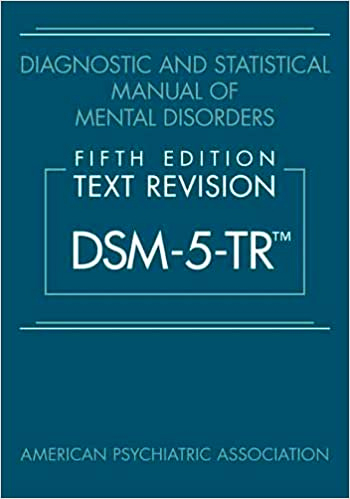
DSM-5-TR was released on March 18, 2022. There were changes to the criteria sets for over 70 disorders—and there was a new disorder of significance to the GriefWork module. The new Prolonged Grief Disorder (F43.8) entails symptoms persisting beyond 12 months. Approximately 10% of the bereaved meet the diagnostic criteria for PGD.
Workshop overview
Growing from life's inevitable losses
Losses happen. Historically, it was the wisdom traditions—religion and philosophy—that provided us with comfort. Today psychology helps too: the utterly universal experience of loss has spawned much excellent scientific research.
This workshop assumes your appointments are brief, averaging only ten minutes. With that in mind, we teach the CBT tools that are highest in impact and practicality. The goal is to efficiently help patients cope—at least a little better—with the pain of some of life’s inevitable losses.
- What are DSM-5-TR's criteria for the new Prolonged Grief Disorder?
- Is it bereavement or is it depression, and if it's "only" bereavement, how should the management differ?
- Kübler-Ross’ DABDA model is outdated. What's the new, evidence-based recovery model?
- Reassurance often isn't enough. What concrete tools help the bereaved—and what tricks can we use to boost compliance?
- Forgiveness (in some form) is often required to overcome a loss. How does the research suggest we define and facilitate this seemingly "churchy" concept for patients?
- People persist to prevent the pain of loss; e.g., with relationships beyond their “best before” dates, and with careers that feel soul-draining. How can one escape the “sunk cost trance” underlying such maladaptive behaviors?
- How prevalent are the so-called “moral injuries”? How can we help those genuinely suffering from them?
- Some patients are overwhelmed by a fear of death. What can we say to ease that common cause of suffering?
-
Relieving suffering is essential, but the greater reward is post-traumatic growth (PTG). PTG isn’t just wishful thinking—it’s a deeply-meaningful possibility. How do we guide patients gently, skillfully, and with heart?
Recommended companion courses
- Depression The Complete CBT Package
- Dysthymia CBT's Pathway out of Chronic Depression & Suicidality
- Happiness Science Evidence-Based Guidance for the Universal Quest
Head instructor Greg Dubord, MD is the CME Director of CBT Canada, and the prime developer of medical CBT. He has presented over 500 workshops, including over 50 for the College of Family Physicians of Canada, and is a University of Toronto CME Teacher of the Year.

| Physicians | Allied health | Residents | |
| Earlybird tuition | $395 | $295 | $195 |
| Regular tuition | $495 | $395 | $295 |
| Last minute tuition | $595 | $495 | $395 |
Sponsors of CBT Canada's workshops have included the CFPC,
Dalhousie, McGill, McMaster, Memorial, Queen's, UAlberta,
UBC, UCalgary, UdeM, USask, UToronto, and Western (UWO).
Times below are Eastern
| Date & time All times Eastern |
Mainpro+ credits & duration |
Earlybird deadline | Workshop status |
| Nov 20, 2024 12:00PM–3:30PM |
9.0 credits 3.0 hours |
Nov 15 save $200 |
COMPLETED |
| May 21, 2025 12:00PM–3:30PM |
9.0 credits 3.0 hours |
May 16 save $200 |
COMPLETED |
| Dec 3, 2025 12:00PM–3:30PM |
9.0 credits 3.0 hours |
Nov 28 save $200 |
COMPLETED |
| Jun 17, 2026 12:00PM–3:30PM |
3.0 credits 3.0 hours |
Jun 12 save $200 |
REGISTER NOW |
If you ever need to cancel your registration for any reason whatsoever, you may transfer 100% of your tuition to another workshop without any penalty, or receive a full refund minus a 25% processing fee (policy).
Don't miss any earlybird deadlines! Subscribe to our email list.
Kind words

Many physician leaders have been trained by CBT Canada over the past thirty years. Alumni include CFPC presidents (both national & provincial), department chairs, residency training program directors—and even a few doctors who can juggle drills & saws. For a compilation of testimonials, click here.
McGill University's GriefWork Workshop
- Another great course. Better insight into how people think, and tools to help them get unstuck. —Krista Bradley, MD, FCFP (Kamloops, BC)
- I love the straight-forward information. —Susan Courtney, MD (Peterborough, ON)
- Entertaining, practical & time-saving. Looking forward to the next one. But Starbucks' gift certificates would make the workshop better. —Michel Bruneau, MD, FCFP (Lac du Bonnet, MB)
- It was great! I’d have had far fewer “heart sink” patients if I'd taken this earlier. Best 3 hours spent for some time. —Wendy Tink, MD, FCFP (Calgary, AB)
- This was an incredibly useful workshop. I really felt that this gave a lot of practical tips to support people through grief as a physician. I think our role is a bit different than a "grief counsellor" and honestly we probably get much less training than them about grief so it was so refreshing to get some formal physician-based training about grief. —Carly Barnett, MD, CCFP (Calgary, AB)
- A huge variety of sources! It’s great to hear about the ancients, as well as the latest studies. —Jennifer Jaco, MD, CCFP (Lakeshore, ON)
- If I’d had this workshop earlier, I would have supported my patients a lot more effectively. Great workshop!!! —Sarah Giraldeau, MD, CCFP (Montréal, QC)
- Medical CBT provides tools for dealing with the most challenging and draining patients. Another great workshop! —Donald Wiens, MD, CCFP (Richmond Hill, ON)
- Practical strategies for working through grief and loss. Simple yet effective tools that impact patients' QOL. Great course! I look forward to attending more in the future —Stephanie Kubik, MD, CCFP (Calgary, AB)
- I now have a much better understanding, better approach, and better tools for dealing with loss. —Martine Theriault, MD, CCFP (Bathurst, NB)
- Comfortable pleasant banter, along with the relevant academic literature. —Jacqueline Gupta, MD, CCFP (Woodbridge, ON)

CBT Canada won the National CME Program Award from the College of Family Physicians of Canada for providing "exceptional learning experiences". CBT Canada was also the first organization to be authorized by the CFPC to provide three-credits-per-hour CME. One accreditation reviewer wrote, "Two words: superlative & exemplary".

CBT Canada has given over 100 workshops in collaboration with Canadian medical schools, including Dalhousie University, McGill University, McMaster University, Memorial University, Queen's University, University of Alberta, University of British Columbia, University of Calgary, Université de Montréal, University of Saskatchewan, University of Toronto, and Western University (UWO). To schedule a workshop, email registrar@cbt.ca.
 Print
Print